Vasoryn Formula –
Every Cardiovascular Ingredient, Explained
A complete ingredient-by-ingredient breakdown of Vasoryn's cardiovascular support formula — what each of the eight components is, what its documented role in cardiovascular physiology is, what published research says about it, and why it was included. Every PubMed and NIH ODS reference included for independent verification.
Two Functional Groups.
Eight Components. One Vascular Goal.
Vasoryn's formula is organized into two functional groups that work in complementary ways. Individually Disclosed Micronutrients — Niacin (20 mg, 125% DV) and Zinc (11 mg, 100% DV) — provide the essential vitamin and mineral cardiovascular cofactor layer, fully transparent on the Supplement Facts label at specific milligram amounts with percent Daily Value figures.
Proprietary Blend (570 mg total) — L-Citrulline, L-Carnitine, Pine Bark Extract, Maca Root Extract, Grape Skin Extract and Saffron Stigmas Extract — delivers the botanical and amino acid cardiovascular nourishment layer. Per FDA labelling requirements, ingredients are listed in descending order by weight: L-Citrulline leads the blend, confirming its primacy as the core nitric oxide precursor component. The NIH Office of Dietary Supplements identifies label transparency and GMP certification as the primary quality indicators for dietary supplement evaluation. See the Vasoryn cardiovascular approach or verified customer reviews.
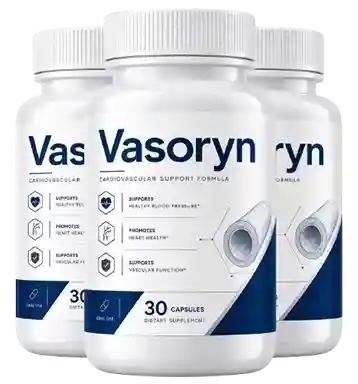
Every Vasoryn Ingredient
Explained with Research
Niacin is the most transparently dosed ingredient in Vasoryn — 20 mg per capsule (125% of the Daily Value), fully disclosed as an individually named nutrient rather than buried in a blend.
Niacin is a water-soluble B vitamin (B3) that serves as the biological precursor to NAD+ (nicotinamide adenine dinucleotide) and NADP+ — coenzymes involved in over 400 enzymatic reactions including cellular energy metabolism, DNA repair, and antioxidant defence. At the cardiovascular level, niacin participates in the metabolic pathways that endothelial cells, cardiomyocytes and vascular smooth muscle cells depend on for normal function. Vasoryn's 20 mg niacin is a standard nutritional-range dose that contributes to the formula's micronutrient cardiovascular cofactor layer — complementing the botanical and amino acid components in the proprietary blend.
Niacin provides the vitamin B3 cardiovascular cofactor foundation that the more targeted botanical and amino acid ingredients build upon. Its individually disclosed dosage also contributes to Vasoryn's label transparency, which the NIH ODS identifies as a key dietary supplement quality indicator.
Zinc is Vasoryn's second individually disclosed nutrient — 11 mg (100% Daily Value) as zinc oxide, providing full mineral Daily Value coverage in a single daily capsule.
Zinc is an essential trace mineral involved in the catalytic activity of over 300 enzymes and the structural function of hundreds of proteins throughout the body. At the cardiovascular level, zinc plays documented roles in endothelial cell function — specifically in the activity of copper-zinc superoxide dismutase (CuZn-SOD), an antioxidant enzyme that neutralises superoxide radicals in the vascular endothelium. Superoxide is one of the primary reactive oxygen species that degrades nitric oxide, converting it to peroxynitrite before it can act as a vasodilatory signal. By supporting SOD antioxidant activity, zinc indirectly protects the NO that L-Citrulline helps produce — a complementary role in Vasoryn's nitric oxide-centric formula. Research is indexed at NIH ODS.
Zinc's role in superoxide dismutase antioxidant activity directly protects the nitric oxide that L-Citrulline helps the endothelium produce — making it a mechanistically coherent companion to the formula's lead active ingredient.
L-Citrulline is the centrepiece of Vasoryn's cardiovascular formula — the lead ingredient by weight in the 570 mg blend and the primary mechanism through which Vasoryn engages the body's nitric oxide vascular pathway.
L-Citrulline is an alpha-amino acid produced endogenously in the small intestine and found naturally in watermelon. Its cardiovascular relevance lies in a specific biochemical pathway: oral L-Citrulline is absorbed in the small intestine and converted in the kidneys to L-arginine by the enzyme argininosuccinate synthetase. L-Arginine is then the direct substrate for endothelial nitric oxide synthase (eNOS), which converts it to nitric oxide (NO) plus L-citrulline. This citrulline-arginine-NO cycle is more efficient for raising plasma L-arginine than direct L-arginine supplementation because L-Citrulline bypasses the intestinal first-pass metabolism and hepatic arginase degradation that limits L-arginine bioavailability.
Nitric oxide released from endothelial cells signals surrounding smooth muscle to relax via cyclic GMP (cGMP) accumulation — the vasodilation process that maintains healthy blood vessel tone and supports blood pressure management. Published human research on L-Citrulline indexed at PubMed includes studies examining effects on arterial stiffness, brachial artery flow-mediated dilation and resting blood pressure.
No other dietary supplement ingredient has a more direct and well-documented mechanism for supporting the endothelium's nitric oxide production pathway. L-Citrulline is the mechanism that makes Vasoryn a nitric oxide vascular support formula rather than a generic cardiovascular supplement.
L-Carnitine supports Vasoryn's heart health dimension by addressing the cellular energy supply that cardiac tissue specifically depends on for sustained function.
L-Carnitine is a naturally occurring compound (synthesised in the body from lysine and methionine) that serves as the essential transporter of long-chain fatty acids across the inner mitochondrial membrane. Without adequate L-carnitine, long-chain fatty acids — which are the primary fuel source for heart muscle cells under normal physiological conditions — cannot enter mitochondria efficiently for beta-oxidation (the energy production process). The heart is the organ with the highest mitochondrial density in the body precisely because of its continuous energy demand, making carnitine-dependent fatty acid transport particularly important for cardiac metabolic function.
Research on L-Carnitine and cardiac function is indexed at PubMed across contexts including exercise performance, cardiac tissue metabolism, and daily physical vitality. L-Carnitine is well-tolerated and widely studied in cardiovascular supplement research.
While L-Citrulline addresses the vascular pathway (blood pressure, vessel tone, NO production), L-Carnitine addresses the cardiac energy dimension — ensuring Vasoryn's heart health claim has a mechanistic basis in cardiac cellular metabolism rather than resting on the vascular ingredients alone.
Pine Bark Extract from Pinus pinaster is Vasoryn's primary botanical antioxidant — the flavonoid polyphenol complex that protects the endothelial environment and supports vascular function through multiple mechanisms.
Pinus pinaster bark extract is standardised for procyanidin oligomers — complex flavonoid polyphenols with potent antioxidant, anti-inflammatory and endothelial-supportive properties documented across numerous published studies. A research review indexed at NIH PMC documents Pine Bark Extract's cardiovascular research including human studies on blood pressure, endothelial function (measured by flow-mediated dilation), and platelet aggregation.
Proposed mechanisms include: stimulation of eNOS activity (amplifying NO production beyond the substrate effect of L-Citrulline); ACE inhibitory activity (reducing angiotensin II-driven vasoconstriction); superoxide scavenging (protecting NO from oxidative degradation alongside Zinc's SOD support); and support for capillary integrity. Pine Bark Extract thus complements L-Citrulline at three distinct points in the nitric oxide pathway simultaneously: increasing NO production (via eNOS stimulation), protecting NO from degradation (via antioxidant activity), and reducing competing vasoconstrictor signals (via ACE inhibition).
Pine Bark Extract is Vasoryn's botanical amplifier of the L-Citrulline nitric oxide mechanism — increasing NO production through eNOS stimulation while simultaneously protecting the NO produced from oxidative destruction before it reaches vascular smooth muscle.
Maca Root Extract brings the adaptogenic dimension to Vasoryn's cardiovascular formula — supporting energy, stamina and the systemic vitality that cardiovascular wellness depends upon beyond the arterial level.
Lepidium meyenii — the Andean root vegetable known as maca — has been cultivated at high altitude in the Andes Mountains for centuries as a traditional energy and vitality botanical. Its active compounds include glucosinolates, macamides, macaridine and various alkaloids that collectively contribute to its adaptogenic properties. In dietary supplement research, maca has been studied for effects on energy, endurance, hormonal balance and mood — factors with indirect but real connections to cardiovascular health and daily physical capacity.
At the physiological level, adaptogenic support for the HPA (hypothalamic-pituitary-adrenal) axis can buffer chronic stress responses that negatively affect the cardiovascular system through cortisol-driven vasoconstriction and elevated heart rate. Maca's position in Vasoryn's formula adds a systemic vitality dimension that complements the more direct vascular mechanisms of L-Citrulline and Pine Bark Extract. Research at PubMed.
Maca Root Extract rounds out Vasoryn's formula by addressing the energy and vitality dimension of cardiovascular health — the subjective experience of everyday physical capacity and stamina that users notice alongside the more measurable vascular support outcomes the other ingredients target.
Grape Skin Extract from Vitis vinifera delivers resveratrol, quercetin, and a broad polyphenol antioxidant complex that provides vascular cellular protection alongside Pine Bark Extract's endothelial support.
Grape skin is among the richest natural sources of resveratrol — a stilbene polyphenol widely studied for its cardiovascular antioxidant and anti-inflammatory properties. Resveratrol has demonstrated effects on eNOS expression (increasing nitric oxide production), SIRT1 pathway activation (associated with endothelial protection and anti-inflammatory signalling), and LDL oxidation inhibition (reducing one of the primary mechanisms of arterial endothelial damage) in published research. Quercetin and other flavonoid polyphenols in Grape Skin Extract contribute additional antioxidant defence against reactive oxygen species that would otherwise degrade endothelial function.
The combination of Grape Skin Extract and Pine Bark Extract in Vasoryn creates a complementary dual-polyphenol antioxidant layer — procyanidins from pine bark and resveratrol/quercetin from grape skin — that addresses endothelial oxidative stress from different polyphenol class angles. Research at PubMed.
Grape Skin Extract's resveratrol independently stimulates eNOS expression — adding a third mechanism of NO production support alongside L-Citrulline (substrate) and Pine Bark Extract (eNOS stimulation). The dual-polyphenol strategy also provides broader antioxidant vascular protection than either botanical alone.
Saffron Stigmas Extract is the smallest-by-weight component in Vasoryn's blend — and among the most bioactive botanical antioxidants per unit weight in the entire formula.
Saffron (Crocus sativus) stigmas contain crocin, crocetin, safranal and picrocrocin — a chemically distinctive group of bioactive compounds with documented antioxidant, anti-inflammatory and mood-supportive properties across published research. Crocin is a water-soluble carotenoid glycoside (unusual in the carotenoid family, which are typically fat-soluble) that provides potent free-radical scavenging antioxidant activity at the cellular level. Crocetin, its aglycone form, is lipophilic and has been studied for effects on blood lipid profiles and oxygen diffusion in published research. Safranal, the primary aromatic compound in saffron, contributes anti-inflammatory and mood-supportive properties that complement cardiovascular wellness through the stress-mood-cardiovascular health axis.
Saffron Stigmas Extract research is indexed across multiple contexts at PubMed, including antioxidant activity, cardiovascular cellular protection and mood outcomes. The NIH NCCIH has summarised existing saffron research for consumer reference.
Saffron Stigmas Extract completes Vasoryn's antioxidant botanical layer with a chemically unique class of bioactives — water-soluble carotenoid crocins — that supplement the polyphenol antioxidant coverage of Pine Bark and Grape Skin Extracts with a distinct antioxidant mechanism profile.
Scientific References — Vasoryn Formula Page
- NIH ODS — Niacin (Vitamin B3): cardiovascular cofactor roles, NAD+ synthesis and safety
- NIH ODS — Zinc: superoxide dismutase activity, endothelial function and cardiovascular roles
- PubMed — L-Citrulline: randomised controlled trials on blood pressure, arterial stiffness and NO production
- PubMed — L-Citrulline vs L-Arginine: bioavailability comparison and plasma arginine raising efficiency
- PubMed — L-Carnitine: fatty acid transport, cardiac mitochondrial energy and heart function
- NIH PMC — Pine Bark Extract (Pinus pinaster): endothelial function, blood pressure and antioxidant review
- PubMed — Maca Root (Lepidium meyenii): adaptogenic energy, vitality and stamina research
- PubMed — Grape Skin Extract: resveratrol eNOS stimulation and vascular antioxidant protection
- PubMed — Saffron Stigmas: crocin/crocetin antioxidant properties and cardiovascular cellular protection
- NIH NCCIH — Saffron: research summary, safety profile and current evidence
- PubMed — Zinc and CuZn-SOD: superoxide scavenging and endothelial nitric oxide protection
You've Read the Science.
Now Read What Users Experience.
Verified Vasoryn customer reviews from real purchasers — or begin your own 60-day risk-free cardiovascular evaluation today.